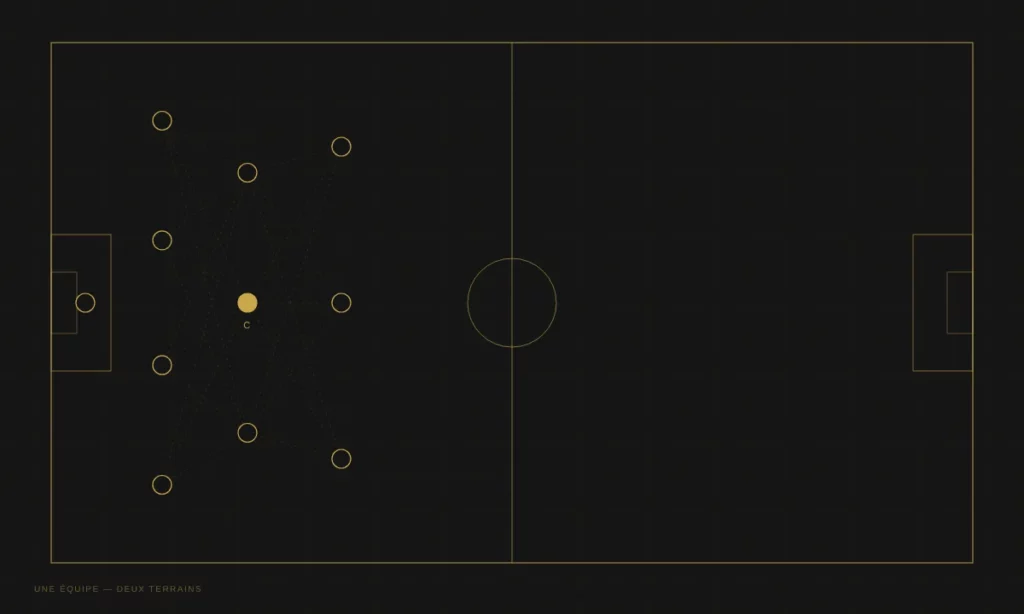
Many industrial directors were excellent shop-floor managers. That is often what earned them their promotion — and sometimes what holds them back afterwards. The two roles call for neither the same perspective nor the same pace.
| Criterion | Manager | Director |
|---|---|---|
| Horizon | Thinks in weeks and quarters. | Thinks in years. |
| Focus | People and execution. | Vision and direction. |
| Key question | “How are we moving forward?” | “Where are we going, and why?” |
| Success | A team that performs. | An organisation that lasts. |
| Decisions | Solving everyday problems. | Arbitrating structural priorities. |
| Position | Works in the company, close to the action. | Works on the company, with perspective. |
The trap of going back to the shop floor
Under pressure, a director who came up from the shop floor tends to step back down: they solve the problems they know how to solve themselves. In the moment, it works. But meanwhile nobody is holding the course, and managers lose the place that should be theirs.
Changing roles is not going up a notch. It is changing altitude.
A good director stays in touch with the workshop — essential in precision industries — but to understand, not to do the work for others. Their job is to create the conditions for their managers to succeed.
Key takeaways
- Two complementary roles, not two levels of the same role.
- The director arbitrates and sets the course; the manager moves things forward.
- Stay close to the shop floor without taking over from the teams.