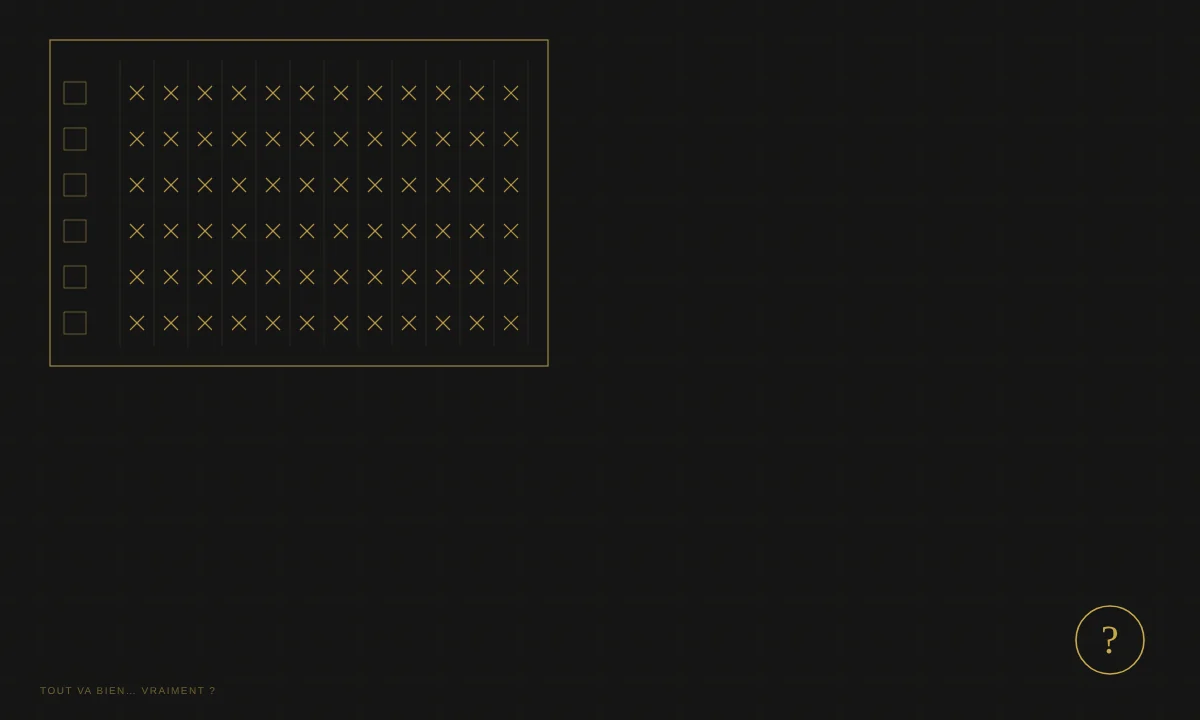
Safety, quality, delivery, cost, morale, 5S: on many visual management boards, the rows follow one another and the boxes all look the same. Green ticks, week after week. You could be pleased. You should rather be worried.
A workshop without problems does not exist
A production line is alive. Materials vary, settings drift, tools wear, teams change. A workshop that reports no deviation for months is not a perfect workshop: it is a workshop where information has stopped flowing.
The board does not go silent overnight. It empties little by little. An operator reports a deviation and nothing happens. They report a second one, still nothing. The third time, they no longer bother to write it down. The green did not arrive because the problems disappeared, but because people stopped mentioning them.
A good shop-floor indicator is not the one that stays green. It is the one that moves.
Bringing the board back to life
- Respond to every report: an answer, even a short one, within a time frame everyone knows.
- Display ongoing actions next to the indicators, not just the results.
- Value the reds and the ambers: they are the raw material of improvement.
- Hold the daily meeting on the shop floor, in front of the board, not in a meeting room.
- Regularly check that the colour criteria are still demanding.
Visual management is not a reporting tool. It is a conversation tool. Its role is to detect drifts before they turn into crises — and it can only do so if everyone feels entitled to report what is going wrong.
Next time you see a board that has been perfectly green for weeks, do not congratulate the team straight away. Ask instead: “What am I not being told?”
Key takeaways
- Permanent green is a warning sign, not a success.
- A report left unanswered kills the next ones.
- The board is there to make the shop floor speak, not to reassure management.