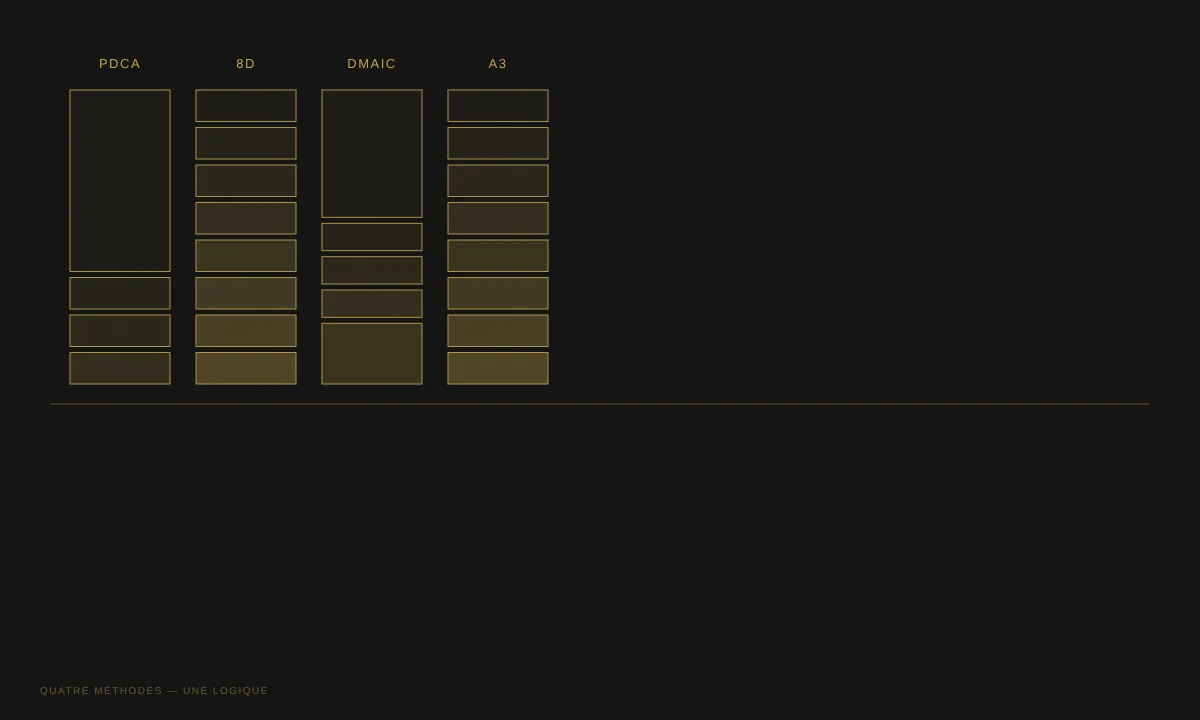
Faced with an industrial problem, the temptation to jump straight into action is strong. Structured methods exist precisely to resist that temptation. PDCA, 8D, DMAIC and A3 share the same backbone: state the problem, find its causes, act, check, capitalise.
| Method | Structure | When to use it |
|---|---|---|
| PDCA | Plan, Do, Check, Act | Everyday continuous improvement, small topics, short cycles. |
| 8D | 8 disciplines, from the team to recognition | Customer non-conformity, complaints, the need to protect the customer quickly. |
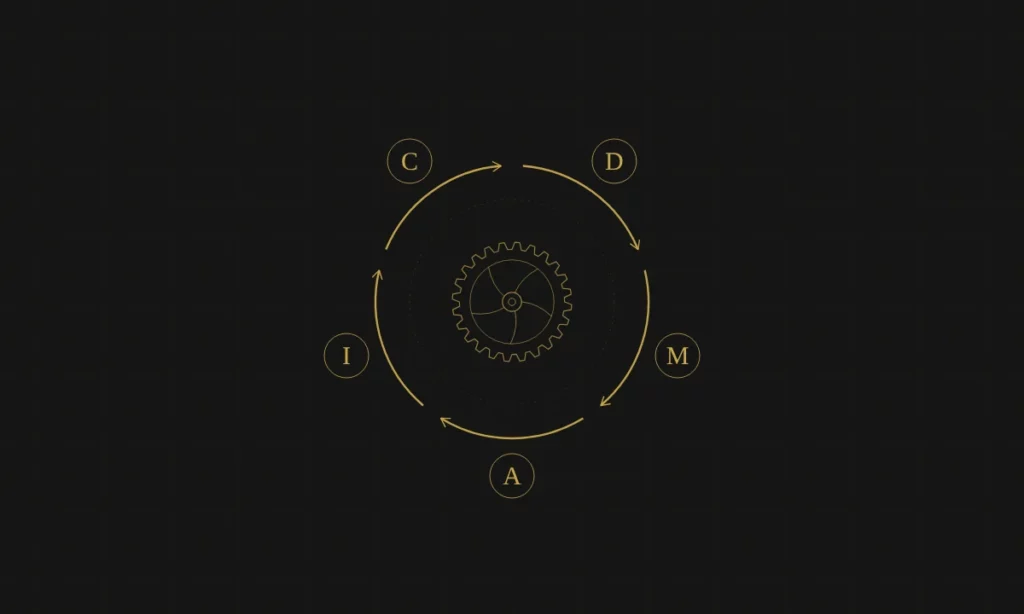
| DMAIC | Define, Measure, Analyse, Improve, Control | Complex problems, process variability, data to exploit. |
| A3 | One sheet: context, current state, goals, causes, actions, follow-up | Sharing an analysis with management and teams in a concise way. |
How to choose?
The main criterion is not the method itself, but the nature of the problem. A customer complaint calls for a fast, traceable response: that is what 8D is for. A process drift with multiple, measurable causes belongs to DMAIC. Day-to-day workstation improvement is handled very well with PDCA. And A3 is above all a communication format that can carry any of these approaches.
The best method is the one the team applies all the way through.
In practice, companies benefit from choosing a common language and sticking to it. A simple method mastered by everyone is better than an arsenal of tools that only a few experts know how to use.
Key takeaways
- Same logic: understand, act, check, capitalise.
- The choice depends on the problem, not on fashion.
- A shared language beats ten poorly applied methods.