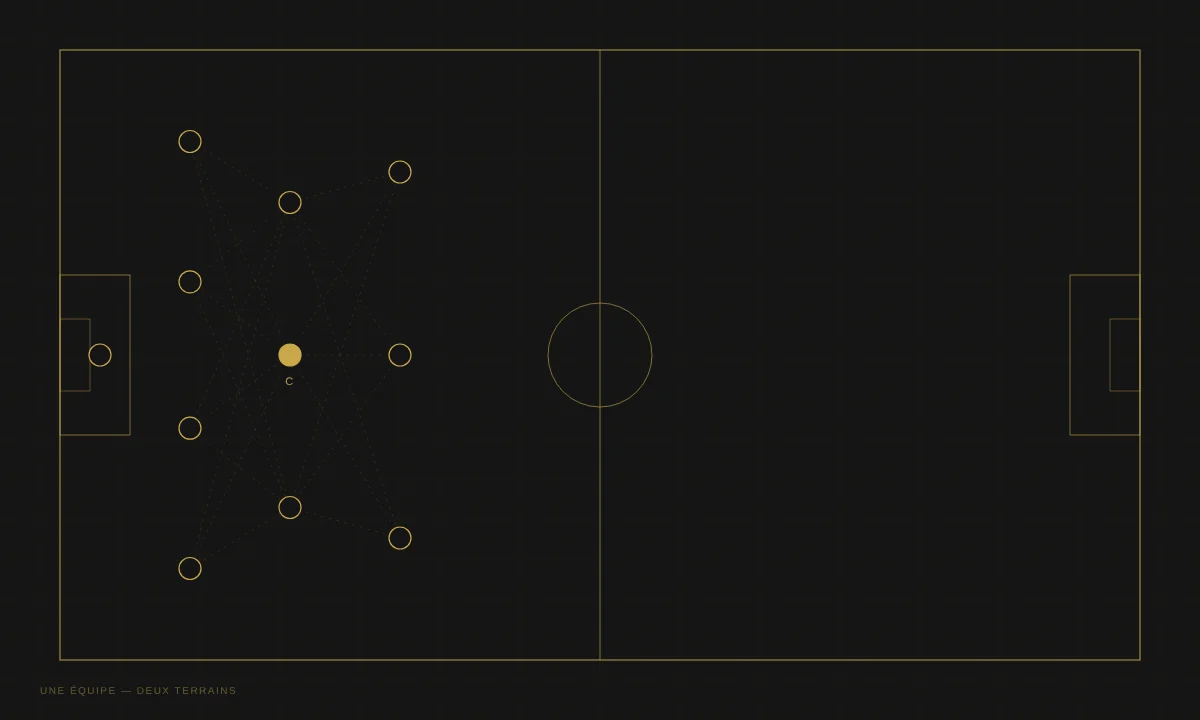
In a dressing room as in a workshop, nobody wins alone. The best player in the world loses the match if the defence is disorganised; the best machine on the floor delivers nothing if supplies are late. The comparison is simple, but it helps put everyone back in their place — and understand what is expected of them.
Every position has its role
| In the factory | On the pitch | What is expected |
|---|---|---|
| Production | The players | Execute, keep the pace, fight for every ball. |
| The industrial director | The captain | Link the shop floor and management, unite people, lead by example. |
| Maintenance | The medical staff | Prevent, treat, restore — before an injury stops the match. |
| Quality | The referee | Make sure the rules are respected, without complacency. |
| Supply chain | The kit manager | The right equipment, at the right time, in the right place. |
| General management | The coach | Set the game plan, pick the team, provide the resources. |
None of these roles is secondary. A team that neglects its medical staff ends the season with injuries; a factory that sacrifices maintenance ends up with breakdowns. And a referee who is constantly challenged no longer protects anyone: quality must be able to say no.
When the season goes wrong
Sometimes a team loses match after match without anyone managing to turn things around. The players are the same, the talent is there, but the momentum is broken. Clubs know the answer: the interim coach.
In industry, that is the role of the interim manager. They arrive with fresh eyes, with no history or career stake in the company. They observe, they listen, then they restore the fundamentals: a clear game plan, roles that are owned, routines that hold.
One single goal: get the team back on track, then leave once the job is done.
The most important point is often the last one: leaving. A successful interim engagement does not create dependency. It leaves behind a team that knows how to win on its own again — with its own methods and its own leaders.
Key takeaways
- Industrial performance is first and foremost collective.
- Each function has a distinct role; none is optional.
- The interim manager restores the fundamentals, hands over and steps back.