A machine investment, a workshop reorganisation, bringing a process in-house: sooner or later, an industrial project comes before the finance department. Speaking the same language is a decisive advantage.
| Ratio | Formula | The question it answers |
|---|---|---|
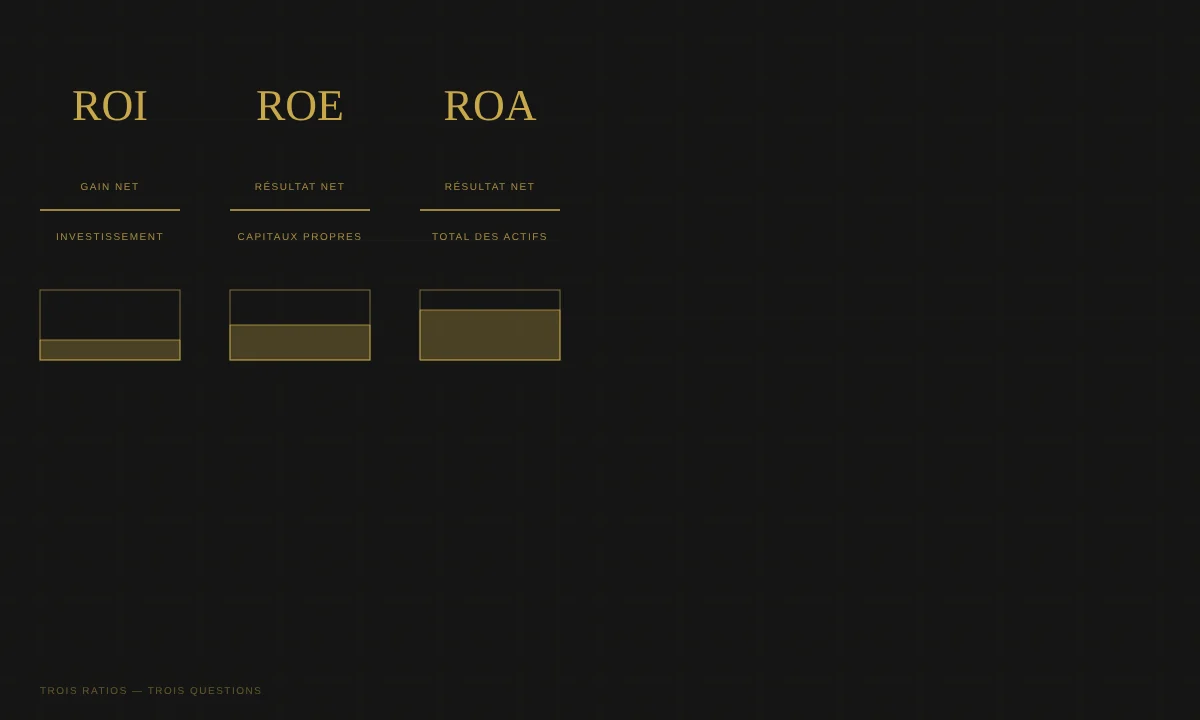
| ROI — return on investment | Net gain of the project ÷ amount invested × 100 | Does this project earn more than it costs? |
| ROE — return on equity | Net income ÷ shareholders’ equity × 100 | Does the company reward its shareholders’ money well? |
| ROA — return on assets | Net income ÷ total assets × 100 | Does the company make good use of its production resources? |
What to keep in mind
- ROI is simple and universal, but it ignores time and risk: the same ROI over one year or over five years does not have the same value.
- ROE can be inflated by debt: compare it with the sector average.
- ROA is particularly telling in industry, where the machine park weighs heavily; it does, however, depend on the age and depreciation of the assets.
A good industrial project is defended with figures, but decided on conviction.
For an operations manager, ROA has a very concrete reading: improving the utilisation rate of existing machines increases the return on assets without investing. It is often the first lever to pull before buying.
Key takeaways
- ROI: a project. ROE: the shareholders. ROA: the production resources.
- Always compare over time and with the sector.
- Making better use of what exists improves ROA without investment.